

On Friday, Pope Francis shared a message for Christian communicators marking the Memorial of Saint Frances de Sales and the 59th World Day of Social Communications. As a writer, I found his words to be both encouraging and convicting and, since so many of us write messages publicly on social media, they are widely applicable.
The Holy Father began by addressing our present times which he said are “characterized by disinformation and polarization, as a few centers of power control an unprecedented mass of data and information.” He said that, in this context, the work of Christian communicators is critical.
He went on to explain that communicators are responsible for the impact of their work on others. So often, writing is solitary work. Spending hours alone creating content, it can be easy to forget that we have obligations to others, but as Christians who are called to write, we have a unique role to play in evangelization, healing, nurturing hope, and creating (and challenging) culture. In fact, Pope Francis proposed that we have an obligation to create content that kindles hope by rejecting fearmongering, hatred, oversimplification, untruths and the weaponization of language. Our words must heal and nurture human relationships. Yet, how often do we use them “like a razor” to wound, divide or manipulate?
In his message, the Holy Father acknowledged that the task of Christian communicators is not easy. In fact, it requires us to care for our own souls and to nurture hope within ourselves. This hope comes at a cost: we must accept the reality of our situations in order to have hope that things will improve. This may mean identifying the ways that we, our families, our communities and our countries fall short which is often painful. In fact, Pope Francis quoted Georges Bernanos, “Only those are capable of hope, who have had the courage to despair of the illusions and lies in which they once found security and which they falsely mistook for hope.” But by facing reality, we learn what we have to hope for and we become familiar with the source of our hope.
Pope Francis used his message to remind readers that our hope “has a face, the face of the risen Lord.” He explained that it is through our hope in Christ that we find our own lives and writing transformed. When we create work that points to truth, to goodness and, ultimately to Him, we fulfill our purpose as Christian writers. This does not mean that everything we write must be banal or religious in nature, but it does mean that our world view, which is infused in everything we create, must be centered upon Him and His truth.
For example, consider Agatha Christie’s Hercule Poirot. Poirot is not overtly religious apart from occasional references to his attending church. However, Agatha Christie’s own Christian world view becomes apparent through her stories’ clear sense of right and wrong. Her work kindles a thirst for justice, honesty and the discovery of truth. At the same time, her books are entertaining and offer readers a chance to rest from their everyday lives, both of which are gifts that God wants His children to enjoy. While I doubt that anyone would be converted by the adventures of Hercule Poirot, they reinforce the reality that our world contains both good and evil, offer hope that what is right can win and justice can prevail, and are, therefore, morally formative, even if unconsciously so. It could even be said that they are able to convey Christian morals effectively precisely because they do so without the reader (and perhaps the writer) being aware that this is what they are doing. Good stories teach good lessons effortlessly and invisibly.
While our writing need not be blatantly religious, Pope Francis explained that our work as Christian communicators “should be steeped in gentleness and closeness, like the talk of companions on the road.” He shared his desire for our work to encourage one another, to kindle community and empathy, and to magnify what is good. When I write, I want my work to be like a stimulating conversation with a good friend that challenges, encourages and illuminates. Some of my writing explores very dark aspects of humanity, but it does so with the purpose of furthering an understanding of the real people whose exist within this darkness and, through that understanding, developing empathy. When I write about such things, I want my readers to be unsettled because it will motivate them to wrestle with the ideas that I am presenting and because such things ought to unsettle us. There are other pieces of writing that I do that are meant purely for enjoyment. This, too, points to God because it allows readers to participate in the pleasantness and beauty that God so richly pours into our days. Most often, my writing is driven by a combination of motivations, but it is always my prayer that it will honor Him.
For us to be able to create God honoring content, we must “be healed of our ‘diseases’ of self-promotion and self-absorption.” We need to recognize that we are the servants of those who consume our work and our job is to help them to find what is best in themselves as they participate more fully in community. While I suspect that most writers have allowed themselves to fantasize about speaking to an audience or landing an incredibly lucrative TV contract, the reality is that we do not write for fame or wealth. God may choose to use our writing to bless us financially, but that is only a secondary purpose. Our work’s primary purpose is to serve Him and others.
When we forget this purpose, we wade into dangerous waters. Communication is fundamentally a way of changing the world. Every word we speak or write becomes an idea that did not exist in that space before. If our work is motivated by selfishness or pride, we have the potential to create powerful and destructive weapons. When our work is directed towards self-serving goals, the consequences can be far reaching.
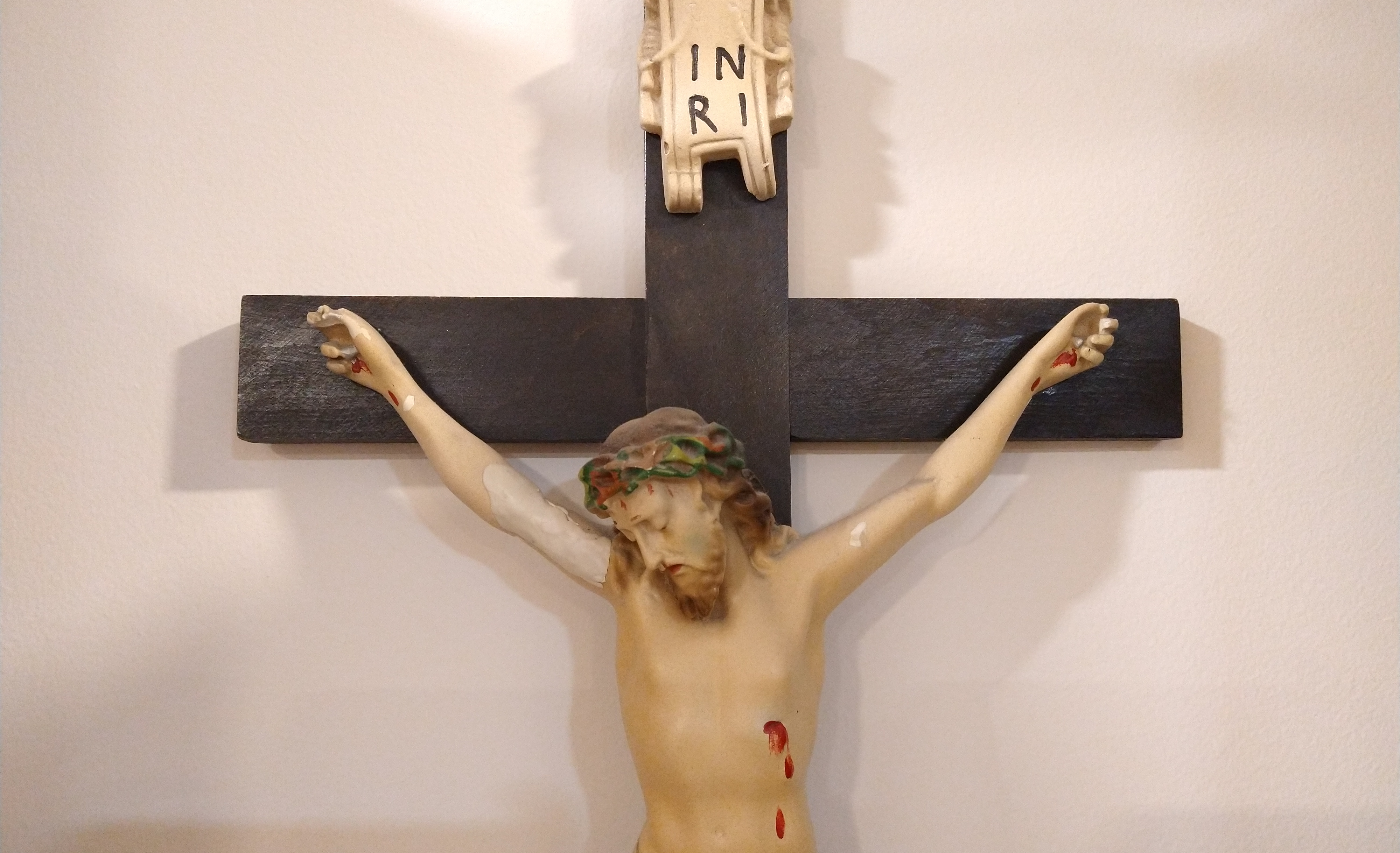
I am reading Jesus and John Wayne: How White Evangelicals Corrupted a Faith and Fractured a Nation by Kristin Kobes du Mez. Early in the book, the author explains that the evangelical community created a vast culture making network through various means of communication: radio, newspapers, book publishers, music, homeschool curriculums, television and the internet. The individuals who were in charge of these communications had tremendous power – often more power than those who had spent years of their life wrestling with and coming to understand theology. This power was wielded in many good ways – in fact, my own faith was deeply enriched by various aspects of this network. But it was also used to promote an understanding of Christian masculinity that involves toughness, aggression and strength – one that idolized the all American cowboy. This is one of the reasons that Jimmy Carter was not more embraced by the evangelical community: he was not a rough-and-tumble, act-before-you-think kind of guy. It is also one of the reasons why, when Jerry Falwell promoted an image of Jesus as a militant, tough guy – “a man with muscles…a he-man!” – many listeners didn’t stop and ask, “Who are you talking about?” If they had not been steeped in the culture of aggressive masculinity that evangelical communicators had created, they would have been able to recognize that the Jesus they were being fed was not the meek Savior in the Bible. Rather than asserting his dominance, focusing on his muscular physique, or becoming a fighter, that Jesus took time to speak with and heal the sick, valued being last over being first, welcomed the little children to come and rest on His knee, and displayed the absolute humility of being born in a stable and executed on a cross. They would have seen that, unlike Falwell’s Jesus, the real Jesus was victorious not through the assertion of His power and might but through the sacrifice of it in complete submission. Many were fooled into believing in a false god because words had been said, written and sung that swayed minds and changed culture in dangerous ways.
The implications of those words went beyond corrupting individual spirituality. Ultimately, it led to a nation that prioritized military might over the protection of the poor and immigrants. It contributed to the moral decay that allowed deeply religious people to overlook countless sins against women and to disregard human dignity in favor of strong-man politics and the promise of safety through aggression. In many ways, it led us to where we are today.
We have a choice whenever we sit down to write. We can advance the kingdom of God or we can act against it. We wield power with our pen (or keyboard) and we alone decide if we will use that power for good or evil. When we do our work well, we communicate the goodness that exists within our world and we help each other to become, as Pope Francis said, “a little less deaf to the cry of the poor, a little less indifferent, a little less closed in.” I want to do my work well so that when my children and grandchildren look back at history, they will know that I did everything I could to bring hope, healing and love to our broken world. I want my efforts to join others in shaping a more godly world. Mostly, I want to write faithfully so that one day Jesus will say to me, “Well done, good and faithful servant,” and I can take joy in the knowledge that my work pleased the One I love above all else.
Image: “the author” (CC BY-ND 2.0) by streetwrk.com









 My Sustaining Grace