Peace To All People

advent4b

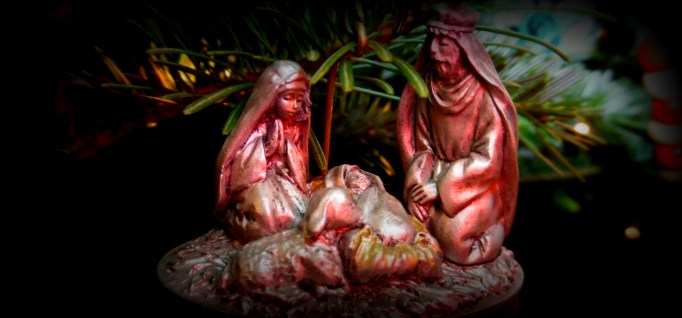
On that first Christmas night, so long ago, the shepherds fell to their knees as they beheld a wondrous presence. They bowed, with their heads so close to the ground that they could smell the rich dirt beneath their knees, and heard a host of angels crying out, “Glory to God in the highest heaven, and on earth peace to those on whom his favor rests.” (Luke 2:14) As the years have passed, these words have persisted at Christmastime. We print them on our cards, we sing them in our carols, we write them in our stories: “Peace on earth, goodwill to men,” “Peace on earth,” “Peace,” “Peace,” “Peace.” Yet, somehow, in the two thousand years since they were first proclaimed, the angels’ words have lost their power. They have come to be happy reminders of warm, cozy feelings that many of us associate with Christmastime, rather than signaling a powerful change that was taking place in our world.

When the angels’ songs pierced the cold, dark fields that night, they heralded the beginning of a life that would shake the very foundation of our existence in two profound ways: by His sacrifice and by His teachings.

First, because the baby born that winter night would offer himself up as a sacrifice to appease the wrath of a perfect God, the angels’ songs proclaimed that the time had arrived when the favor of God, which had been lost through sin, would be restored.  The Bible tells us that when sin first entered our world, Adam and Eve heard God coming and hid from Him. In other words, their sin shattered the intimacy they once shared with God and the angels’s song so many years later proclaimed that men could again draw near their Creator. “Peace,” they sang, “peace to those on whom God’s favor rests.”  They rejoiced before the shepherds: “Finally through God’s son, His favor can rest on you,  unworthy though you may be.” The praise of the angels was an announcement that the sin of man no longer demanded that he was the enemy of God. Instead, unlike Adam and Eve men could again stand before God naked and unafraid.

But let us consider that moment when sin first entered our world again. Immediately after Adam and Eve found their relationship with God to be shattered by their disobedience, they discovered that their own relationship had been marred. While Adam had once loved Eve so deeply and intimately that he viewed her as part of himself (Genesis 2:23-24), after sin entered the world he became so detached from his beloved and so controlled by his fear that he turned on Eve in an attempt to deflect blame from himself (Genesis 2:12). God Himself identified this shift in their relationship when He told Eve that, because of her sin, “you will desire to control your husband, but he will rule over you” (Genesis 2:16). Because of sin, the selfless peace of right relationship that had existed between man and woman was lost. Not surprisingly, the Bible tells us that this disruption of peace spread beyond the relationship between the first man and his wife. The story that comes immediately after Adam and Eve’s descent into sin and their banishment from the garden, tells of the murder of their son by his older brother (Genesis 3).

Peace no longer dwelt with humanity. There was no peace with God. There was no peace between men.

Yet, in the fields outside of Bethlehem on a dark Christmas night, the angels announced the birth of one who would teach his children to live in peace with one another again. This little baby whose birth brought peace between man and God would also grow up to teach that the love of our neighbors was second only to love of God (Mark 12:30-31). The same child would one day proclaim that those who fed the hungry, quenched the thirst of the parched, welcomed the stranger, clothed the naked, and visited the sick or imprisoned are the ones on whom His favor truly rests (Matthew 25:31-46). This tiny baby, the one whose birth was celebrated by choirs of angels, came to restore all of the peace that was lost through sin. He came to bring man peace with God through His sacrifice and He came to teach peace between neighbors.

These past few years, though, it has been difficult to believe the angels’ promises of peace. Continued conflicts in the middle east, battles with ISIS, the threat of nuclear war with North Korea, the weakening of alliances within the European Union, the fear of Russia all remind us of the fragile state of peace on a global scale.  At home, we have witnessed our leaders fighting with words that are banned from our homes and overlooking violence their peers have done to others for the sake of their own power. We have been forced to face the horrific resurrection of racism that we thought was dead. We have mourned for our brothers and sisters who are being killed on the streets, at concerts, in their schools, and in their places of worship. We have turned our backs on those orphaned and abandoned by addicted parents. We have blamed and neglected our own countrymen who suffer unimaginable losses.  Even nature seems intent on seeking revenge for the years of abuse that we have battered it with and our determination to continue to take it for granted. In short, all too often, we find ourselves forgetting the song of the angels, and instead sing along to the words of Longfellow: “And in despair I bowed my head; ‘There is no peace on earth,’ I said, ‘For hate is strong, and mocks the song of peace on earth, good-will to men!'”

Still, as we light our Advent candle this week, we are forced to remember the angels’ songs. We are reminded that Longfellow’s poem did not end in despair. Instead, we must sing along: “Then pealed the bells more loud and deep: ‘God is not dead, nor doth He sleep; the Wrong shall fail,the Right prevail, with peace on earth, good-will to men.” As we are comforted by the knowledge that God is not dead and does not sleep and as we begin to hear again the song of the angels who proclaimed the birth of our Savior, we hear Jesus whisper to us, “I am here, Emmanuel, God with you. I have restored your peace with me. Now, go out and bring my peace into the world as I have taught you to do. Advent, the time of preparation has ended. Go now!”

*If you are interested in listening to Henry Wadsworth Longfellow’s Poem, “Christmas Bells,” I highly recommend Casting Crown’s version of “I Heard The Bells On Christmas Day.” 

Rejoice

advent3c

The third week of Advent begins with Gaudete Sunday and is my personal favorite. The word Gaudete means “rejoice” as in “Rejoice in the Lord always” (Philipians 4:4). Not surprisingly, the candle that we light on Gaudete Sunday is the Joy Candle or Shepherd’s Candle, which reminds us of the angel’s greeting to the shepherds on the night of Jesus’ birth: “I bring you good news that will bring great joy to all people. The Savior – yes the Messiah, the Lord – has been born today in Bethlehem, the city of David!” So, in the midst of the penitential season of Advent, we are called to joy (hence the contrast between the traditionally pink color of the Gaudete Sunday candle which symbolizes joy and the three other purple candles which symbolize repentance and waiting.

Unlike happiness, the joy that the angel proclaimed is an abiding joy that does not change with the seasons or vary with external circumstances. It is not just a warm, contented feeling. Instead, it is strong, enduring, and (for us who have the benefit of looking back after Jesus’s earthly life ended) rooted in the reality that our Savior has been born, lived, died, and rose again. Because of His life, death and resurrection, we can rejoice knowing that we are rescued from the bondage of our sins and that God is working out the realization of His kingdom in our world today.  We can be filled with joy in the midst of the most difficult circumstances because we know that, ultimately, everything will be alright.

The Bible offers us many examples of joyful people who expressed their joy in a variety of ways.  Miriam and David  danced and sang before God as they thanked Him for His work in their lives (Exodus 15:20-21 and 2 Samuel 6).  Hannah, Zechariah and Mary  sang songs of joy for the the work of God, His compassion, and His care for the poor (1 Samuel 2, Luke 1:46-55 and 68-79). The shepherds that we remember during this week of Advent received the angel’s news of great joy and confirmed it with their own eyes. Then they ran to share their joy with others and returned to their daily work “glorifying and praising God.”(Luke 2:17-20) Later, the disciple Paul learned to be glad even when forced to confront his own weaknesses because he saw God working through them (2 Corinthians 9-10). Amazingly, the Bible even offers us a glimpse of the rejoicing ones that fill Heaven: the angels and other Heavenly beings who “fall before the throne with their faces to the ground and worshiped God” (Revelation 7: 11) and those who, having “washed their robes in the blood of the Lamb and made them white,” serve God without ceasing as He shelters, feeds, protects, shepherds and comforts them (Revelation 7:14-17).

Even in the midst of our everyday lives, we see glimpses of those who live life with an abiding joy. We see it in the elderly woman at church who can say “it is well with my soul” in the midst of great loss. We see it in those who have been rescued from addiction and live each day in gratitude to the One who saved them. We see it in writers, speakers, priests and pastors. We see it in all who attest to the truth that Christ has come into our world and is at work in our lives. And when we pause to consider that truth – that Christ has, indeed come and that He is working out each aspect of our lives for good – we can see joy in ourselves, no matter what our circumstances may be. The question is, once we have glimpsed this joy, will we keep it buried deep inside or will we, like the shepherds on that Christmas night so long ago, hurry to share the good news with others and allow our joy to permeate our lives, even as we go back out into the fields and resume the everyday tasks involved in tending our flocks?

“Joy to the earth! The Savior reigns! Let men their songs employ. While fields and floods,
rocks, hills, and plains repeat the sounding joy, repeat the sounding joy, repeat, repeat the sounding joy!”


*Dedicated to my daughter, Marienka Joy Sroubek -wanted child and sorrow that God will turn to joy.

Preparations

advent4

“Uh-oh!” I thought as I listened to my preschooler say, “I have to be really good now because Christmas is coming and I want to get all of my presents, but it’s so hard to be good!” Last year she asked us if Santa was “really real” and because she was in the midst of learning that Heaven is “really real,” and that her sister is alive there, we told her the truth. I was surprised, therefore, that she thought that Mommy and Daddy would give her coal if she was naughty.

“You know,” I said, “I want you to be good because you want to be good, but you don’t need to be good to get Christmas presents. We can never be good enough to receive the gift of Jesus, but He came anyway, right? Mommy and Daddy give you presents because we love you (not because you deserve them), just like God sent us Jesus because He loves us and not because we deserve Him.”

As we prepare ourselves for Christmas during Advent, it is easy to focus on the many ways that we are not ready to stand in Jesus’s presence. Since it is a season of penance, we rightly examine the state of our souls, but we can become preoccupied with our sins and feelings of unworthiness. We forget that our failure to measure up is the very reason that Christmas is such an unbelievable gift: Jesus came into our world in the midst of all of its unworthiness because He loves us. He doesn’t love us “if we do something.” He doesn’t love us “if we don’t do something.” He just loves us.

It is in response to this love that we should begin to prepare ourselves for His coming and to set out on our journey towards becoming the people who He intends for us to be. It is because He loves us that we should persevere through hardship and do the work that He has set before us to do. It is due to His love that we should be willing to go where He leads us. It is only ever in response to His love that we prepare for His coming and never to obtain His love, for it cannot be obtained.

“…for all have sinned and fall short of the glory of God.” (Romans 3:23)

“…his faith and his actions were working together, and his faith was made complete by what he did.” (James 2:22)

Waiting in Darkness

advent 1 remake

Over the next few weeks, mysustaininggrace.com will be posting reflections for the coming week of Advent. Each reflection will focus on the theme of the advent candle for the corresponding week. The first candle, which we will light on December 3rd, is the Prophet’s Candle or the Candle of Hope. 

“Once upon a time…”

Every child knows that a good story begins with, “Once upon a time” and ends with a  “happily ever after.” In between those two points, however, lies unknown dangers, struggles, sorrows and heartaches. Perhaps this story format is so appealing to us because it mirrors that of the Great Storyteller who began His tale “Once upon a time” in a perfect garden and will end it “happily ever after” in a flawless Heaven. Although the festive Christmas season may prevent us from seeing it, the season of Advent reminds of us of our existence between these two glorious endpoints in God’s story.

During Advent, we are asked to remember the long wait for a Messiah, the hope fostered by the prophets, and the thousands of years worth of prayers for deliverance that flooded the gates of Heaven. We are called to recall a time when hope was just a tiny flicker in the midst of darkness, when the people waiting in darkness had yet to see a great light. At the same time, we are challenged to reflect on our own sin-stained souls and to renew our deep longing for salvation. We are forced to acknowledge that the whole of creation “waits eagerly for the revealing of the sons of God…in hope that the creation itself also will be set free from its slavery to corruption into the freedom of the glory of the children of God.”(Romans 8:19-21) We are required to listen to our spirits as we “groan within ourselves, waiting eagerly for our adoption as sons, the redemption of our body.” (Romans 8:23).

This spiritual longing for Christ’s coming and salvation is a deep, natural one that rises up from the core of our being and permeates every part of us. It is profound and powerful and all of creation echoes our soul’s groaning. It is like a bereaved mother whose longing for her child is so strong that her arms become painful, heavy and restless as they reach out into empty darkness, waiting to be filled and receiving only the reply of “not yet.”

Advent also reminds us, though, that in the midst of that darkness, there is a flicker of light. Through the spoken words of the prophets, the written words of the Bible, the gaze of Christ looking tenderly out from a portrait, the loving actions of a neighbor, we are reminded that Christ is coming. We feel a shimmer of excitement shiver through us as it whispers, “The arrival is coming!” We hear the swipe of a match and see the tiny blaze of a single candle burning in the black of night. We smell the smoke and feel its slight warmth. Though we can scarcely believe it, it is there. A candle of hope that reminds us that He is coming.


Advent Series 2017

Advent Announcement.JPG

Beginning on Friday, December 1st, myssutaininggrace.com will be celebrating advent with a series of reflections. Every Friday throughout Advent, a reflection that corresponds with the candle meanings for the coming week will be posted. May you have a joyful and reflective Advent season this year!

“The Good Life”

20161115_160214

Lately, I have been thinking about how to respond when my hopes and dreams are different from God’s will for me. For a long time, my desire has been to have a small, happy, healthy little family with a few children. I want to raise my children to know God, to have the opportunity to enjoy the little everyday blessings of helping children to grow and learn, and to build a strong family unit that will provide my children with refuge and support after my husband and I are gone. The selfish part of me also wants another opportunity to relish the moments that delighted me as a mother and to not take the other, less savory times for granted. I want a chance to be a better mom and to someday be a grandmother without the pressure of my living daughter being the only child who could fulfill that dream. I would like to be comfortable and to live responsibly and without anxieties, anger, or sorrow. I want my children to have a chance to grow and develop through the kind of protected childhood I had. Then, I reason, others can see the joy we have and the blessings that we have been given and see the handiwork of God.

My desire for me and for my family is a lot like the life that Chris Rice describes when he sings “Becky has a house on Abundant Live Boulevard. A good name, good family, and butterflies in her yard. Becky loves Jesus and really wants to make Him proud – she tears up in church and she sings her harmonies loud. She’s got a Bible by the bed, a prayer journal, and a fish on her car. She makes sure to bow her head and give thanks in every restaurant…” Since these things I want are all good things and none of them directly contradict God’s commands, it seems like they should logically be part of His will for me. Yet, over and over again, I feel like God brings me closer to having a small family with happy, Godly children, only to dash my hopes again. Or maybe He says, “Keep waiting,” but there’s no guarantee that what we are waiting for is what we hope for.  I find that I need to accept that God might not want “the good life” to be my life.

We are immersed in a culture that sees blessings when we are comfortable, peaceful, satisfied and happy. We feel blessed when we get a new job, a new house, or a healthy baby. But what happens when we lose our job, or our home is destroyed, or we look at the ultrasound monitor and realize that our baby no longer has a heartbeat and that we have yet another child waiting for us in Heaven instead of in our arms? What happens when we get sick and have to be subjected to painful medical procedures that we never wanted or when our good friends die too soon, leaving broken families behind them?What happens when we never get our rainbow at the end of a storm, when our problems are never resolved and when we have to learn to live with them? What happens if we never get a miracle?

What happens is that we are still blessed.

We are blessed because God continues to be intimately at work in our lives in the midst of our shattered dreams and sorrows. We are blessed because He knows what He is doing and His work is good. We are blessed because He is giving us exactly what we need to be the people He wants us to be. We are blessed because He is giving us the tools to fulfill our specific purpose in His world. We are blessed because He knows what lies ahead and He is preparing us and those around us for what will be.

We are also blessed because Jesus looked at our understanding of blessings and turned it on its head. He said:

You are not only blessed in prosperity and comfort, because “blessed are the poor in spirit.” You are not only blessed in happiness, because “blessed are those who mourn.” You are not only blessed in times of peace, because “blessed are the peacemakers.” In fact, he said that even those who are persecuted are blessed! (See Matthew 5:3-12 to see more of what Jesus said about blessings.)

Ultimately, we are blessed because we play a tiny role in His salvation story which will end in glorious redemption! All those tears we cry will be redeemed. All those losses we suffer will be redeemed. All those burdens we bear will be redeemed. All those disappointments that beat us down will be redeemed. And, most importantly, all of the world’s sufferings that, because of our human limitations we can not yet perceive, will be redeemed.

We have much to be thankful for, whether God chooses for us to live “the good life” or “the hard life.”

Heart Scars

scars

As many women do, I have scars from both of my daughters. In both cases, the wounds that turned to scars were the result of urgent to emergent situations and I had little warning that they would occur. As a result, when my skin was first cut, I couldn’t bear to look at it. It was gross. It was painful. It looked horrible. In fact, one of them was so ugly that my obstetrician said, “Wow, you can tell that (the surgeons) were in a hurry.” Over time, however, I grew to view my scars as cherished reminders of my children and the physical manifestations of my mother-love for them. This is especially true of the scar I bear from the daughter who died because it is one of the few physical reminders that I have of her.

In addition to my external scars, my second daughter’s death also left scars on my heart. In the month after Noemi died, I took the above picture because I believed that, just as God had turned a scarred and broken city landscape into a place of peace and beauty,  He would take my wounds and turn them into something beautiful.  A year later, I am beginning to see that transformation. I will always have sadness – we were made for eternity, not death – but because of eternity, I am increasingly aware of the gift that my daughter’s short life here on earth is.

In light of this, I should not have been surprised that, while I dreaded the first anniversary of Noemi’s death, it was truly a blessing. In fact, I had so much joy on that day that I woke up the next morning and wished I could live it all over again. Rather than making myself visit her grave, look at her pictures, rummage through her hospital box, and remember every detail of the hour of her death, I spent the day with my family and friends. We taught kids, had an adventure, and went out to dinner. Certainly, I remembered and celebrated both Noemi’s earthly and heavenly birthday, but I also felt a strong conviction that I was not supposed to spend the day picking at my heart scars and trying to feel their sting. Instead, I felt that I was meant to behold the peaceful beauty of those scars in the light of Heaven. I believed that I was meant to hear Jesus speaking the words he spoke to Mary, “Woman, why are you crying? Who is it you’re looking for?” (John 20:15) and to know the power of His resurrection that makes my heart scars precious beyond anything I could have imagined.

SOS

sinking ship

“You rule the swelling of the sea; when its waves rise, You still them.” – Psalm 89:9

I’ve often wondered what I would do in a real emergency. While I wanted to believe that I would prioritize my daughter’s safety above my own, I was not entirely sure and I worried that, in a moment of crisis, I would become irrational and focused only on my own survival. After all, while I love being a mom and want to be a good one, each day I engage in countless selfish acts. I worried that, since I respond selfishly when I want “just one more minute of peace,” I would respond much more selfishly when my life was in danger. Sure, I had heard about a mother’s instinct to protect her children, but that instinctive selflessness to protect offspring from danger seems to be one of the ways that we were made in God’s image and I worried that this part of who God created me to be had been marred by sin. Last Sunday, however, I was grateful to find that part of God’s image at the core of my being.

Our family had gone on a boat trip to a large lake that we only visit once every few years. While we know the lake to some extent, we are not completely comfortable on it. The day was sunny with a nice breeze and we decided to spend some extra time in the less familiar lake before returning to more familiar waters. After a middle-of-the-lake picnic, we began heading towards a more sheltered area for a swim and, as we steered towards shore, the wind and waves picked up. We were warned by three splashes of spray that hit our faces in rapid succession and then the bow of the boat suddenly plunged under water and I found myself standing on the downward moving deck of the boat in waist deep water. As I looked around me, I saw that my preschool aged daughter’s life vest had pulled her feet from the floor of the boat and she was floating towards the open water.

It was at that moment, that I knew God had kept part of His image intact within me: in the midst of the chaos around me, the only thing I cared about was my daughter’s safety. Yes, I wanted to stay alive, but, honestly, the only reason that I cared about my survival was that I knew my daughter would need me to help her survive.

I grabbed my daughter’s life preserver, pulled her with me to where the water was shallow enough for her to stand, and helped her run up the sloping deck to the back of the boat where the rest of our family was gathered. By the grace of God, the bow of the boat then surfaced and the water flowed to the back where it was able to easily flow off into the churning water beneath us. After a terrifying few hours, we made it safely home with a renewed thankfulness for God’s provision and gratitude for each other.

I share this story, not because I want to boast about my “Momma Bear” instinct. After all, I did not lift a car off of my child with my bare hands like some mothers reportedly do. In fact, if I am honest, I was the least courageous of the adults on the boat (which my tears during our torturous journey to shore soon revealed). Instead, I share this story because it was a moment that showed me something profound about God and about the depth of His love for us.

You see, because of sin, God’s children have also been on a sinking ship. The eternal life that they were created to share with their Father in paradise was lost and they faced destruction. Yet, God loved His children so much that, when they were drowning in sin, He sacrificed Himself to make sure that they survived. In the past, I had always assumed that this was a rational decision that God made but, having felt the all encompassing desire to save my own child, I now I suspect it wasn’t a decision at all, but a natural result of who He is at His core and how deeply He loves us.

So no matter what is happening in your life today, please know that you have a Father with a fierce “Papa Bear” instinct whose whole being was so focused on saving you that He willingly sacrificed Himself to do so. Having done that, He’ll be right by your side as He steers you safely to shore.

“Can a woman forget her nursing child and have no compassion on the son of her womb? Even these may forget, but I will not forget you.” – Isaiah 49:15


A Lament for the Church

sound the alarm.JPG

There is a serious problem in Christianity. It is not isolated to a single denomination. It may not be a global problem, but it is certainly ravaging Western society. It is being magnified by the unchristian behaviors of our world leaders, media news stories, and the heroes of pop culture; however, each of us is ultimately responsible for it and we cannot shirk our responsibility. It is resulting in the loss of souls and new generations who are growing up to reject Christ. It is undermining the legitimacy of the Gospel message and earning us every charge of hypocrisy we have ever received. It is so urgent that we should be sounding alarms and rallying troops, charging into battle against the evil that has infiltrated us.

The problem that we face is that, through our lack of love, we have become resounding gongs and clanging cymbals (1 Corinthians 13:1). Backed into a corner by our increasingly secular and permissive society, we have responded with anger instead of turning the other cheek and speaking the truth in love (Matthew 5:39 and Ephesians 4:15). Rather than seeking to meet our neighbors where they are, rather than cleaning and bandaging their gaping wounds, rather than saying,”Father, forgive them, for they do not know what they are doing,” (Luke 23:34), we mock them, belittle them, hate and vilify them.

The absence of love colors our approach to homosexuality, end-of-life issues, contraception, denominational differences, racial discord, and countless other pressing topics that litter our social and political landscapes. Ironically, unlike many mothers who become more enraged by abortion after infant loss, since Noemi’s death, I have come to see our lack of love most poignantly in the way we address abortion.

Within a week of my daughter’s death, some dear friends gave me the book Sunshine after the Storm – A Survival Guide for The Grieving Mother, which contains a chapter about grief after medically recommended abortions. One of the stories in that chapter really struck me. While I absolutely believe that a new life is formed at the moment of conception and while I believe that abortion is, therefore, wrong, I also could not help but feel the agony of the mother in this story who was told,”Your child will be incapable of living without significant medical assistance. She will most likely seize to death upon delivery.” When that mother explained her choice to abort her baby by saying, “We did not want our daughter to exist solely because of machines…as much as we loved and wanted our daughter, we didn’t want her existence to be one of constant suffering,” I got it, I totally got it.

Having worked with profoundly disabled individuals who suffered years of intense pain and were constantly subjected to medical procedures that sustained their limitted existence, I was happy for Noemi when she died after 30 minutes of failed resuscitation. Had she lived, she would have sustained incredible brain damage and the choice to maintain her life would have been a way to avoid my own loss, rather than an opportunity for her to experience life. I am not saying that, had God granted her life, it would not have had value, nor that I would ever have deliberately ended it. Instead, I am saying that I would rather my daughter be in Heaven than be subjected to such a painful existence. Having experienced these thoughts about my own daughter, I understood the reason that this grieving mother chose to abort her child. Far from a “murderer,” she was a mother who, because she did not share my beliefs about abortion, did what she believed was the most loving thing that she could do for her baby.

How would Christ have responded to this mother if He met her leaving the abortion clinic? Would He shame her and condemn her or would He wrap her in His arms and allow her to sob on His shoulder? For that matter, how would He respond to a frightened teenager who gave her body away in an effort to feel the love and acceptance that she never recieved at home? Or to the young woman whose life was so incredibly painful that she preferred drug induced feelings of numbness and dissociation and then came out of her stupor and found herself “great with child?” Or to the mother who can’t feed the five children she already has or who fears that carrying a child to term will leave her children without their mother? Or to the young professional who has no relationship with God and has never understood how a bunch of cells can be considered a human but knows that those cells will ruin her career if she lets them grow?

He would never have compromised the truth or overlooked their sins, but, given the way He responded to the woman at the well (John 4), I suspect that He would have been more concerned about their salvation than about their sins. Afterall, He has already dealt with their sins, but He longs for a relationship with these women. I would venture to guess that He would have been careful to treat them with dignity and love.

What would our Christian witness be like if, instead of responding to these mothers with rage, disdain and condemnation, we responded like Jesus and we offered love? What would the world be like if, rather than resounding gongs and clanging cymbals, we were doves of peace and ambassadors of God’s love? The possibilities are endless because “love never fails.” (1 Corinthians 13:8)

“Love is patient, love is kind. It does not envy, it does not boast, it is not proud. It does not dishonor others, it is not self-seeking, it is not easily angered, it keeps no record of wrongs. Love does not delight in evil but rejoices with the truth.  It always protects, always trusts, always hopes, always perseveres.” (1 Corinthians 13:4-7)

Being Desired

Being Desired.JPG

Our family theme this month has been being wanted vs. rejection. The summer weather has brought along some tearful playground moments when the other kids haven’t wanted to play with my daughter (or have yet to realize that they really can have more than one friend a day) and I would venture to guess that I am not the only mom whose own early childhood rejections come surging to mind as she watches her child walking across the wood chips with a quivering lip. Add to that the fact that writing (or more accurately, publishing) is an exercise in rejection and we’ve spent a lot of energy on being unwanted lately.

However, being wanted and accepted has also been something we’ve been experiencing a lot of. We still love trips to the playground because, more often than not, my daughter leaves with a great big hug from a new friend. On my part, being the mother of a young child has allowed me to make more friends than I have ever had and to develop those “I’ve got your back” kind of relationships that, until relatively recently, have been few and far between. And, as an exciting change of pace, I even had a break through in the writing rejection process recently!

So we’ve been learning about how it feels to be desired and how it feels to be discarded.

Interestingly, I’ve also been reading a new Bible study by Heather Holleman that just came out last month called Included in Christ. The main premise of the study is that we all have a story that we tell about ourselves and who we are. Many of us tell stories that define our lives based on painful experiences that we have had and, as I have read some of these stories, I am amazed by how many of us let our “not good enough,” “they didn’t pick me,” and “I’m so awkward and defective!” experiences dictate how we see ourselves. These stories of rejection literally zap our lives of many of the blessings that God wants to bestow on us.

It doesn’t have to be this way. Instead, we can let the stories we tell ourselves (and others) about our lives be centered on the reality that the God of the universe thought us up, created us, and desires to spend our lives here on earth (and even our eternities) with us. I wonder what would happen if we held our earthly experiences a little more loosely and, instead, defined ourselves by how God sees His people: “The Lord will hold you in his hand for all to see – a splendid crown in the hand of God. Never again will you be called the ‘Forsaken City’ or ‘The Desolate Land.’ Your new name will be ‘The City of God’s Delight’ and ‘The Bride of God,’ for the Lord delights in you and will claim you as his bride.” (Isaiah 62:3-4). If our life stories reflected the truth that God delights in us rather than that people have rejected us, how would our lives change? How would our relationships change?  How would the way we treat even the least among us change? I suspect that the world would be a much more joyful, fulfilling and gentle place to live.