A Threat Worse than Communism

As Posted To Medium on November 17, 2021

On November 17th, I always think about Communism. It is the day that my family celebrates the start of the Velvet Revolution, which was a series of protests that resulted in the end of Communism in Czechoslovakia. We eat our various favorite Czech foods: knedliky (dumplings), smažený květák (fried cauliflower), brambory (potatoes), pernik (gingerbread) and Pilsner (no translation needed). We listen to “We Shall Overcome.” We tell our children real life stories about their dad, grandparents, aunts and uncles who participated in the protests. We teach them how terrible Communism was for people they know and love. We remind them of the impact that the fall of Communism in the Czech Republic has on our own daily lives. We generally hate on Communism and, more emphatically, thank God for its end.

This year, as I delighted in my smažený květák, I was reminded of many friends who have looked at my political leanings and asked, “Aren’t you and your husband afraid of Communism? Don’t you know that the Democrats/Church/colleges are infiltrated by Communists? Haven’t you read about immigrants from Communist countries who say that they see Communism coming for America?” I think that these friends are surprised to hear me respond that, while we hate Communism, we are much more concerned about something else.

The National Monument on Vítkov Hill, Prague, CZ

Just in case I haven’t been clear enough yet, in my house, we hate Communism. That is why my family protested. That is why my brothers-in-law all know English. That is why my husband was warned after he sang an American song to his pediatrician. That is why we celebrate with our kids each year, teaching them truths about recent history and preparing them to fight to ensure it never happens again.

However, there is something that we fear and hate, far more than Communism: the evil that dwelled in the hearts of man and allowed all of the wrongs that happened under Communist rule. That evil — greed, the pursuit of power, dehumanization, anger, hatred, cowardice, lawlessness, lies and self-interest — and not the system of governing itself is what led to the atrocities we remember. In fact, many communist ideas, such as the elimination of exploitation, are fundamentally good. However, its implementation in history has been profoundly corrupted by the evil of man and its methods have made it vulnerable to this corruption. In other words, Communism is guilty of allowing man’s evil to prey on innocent victims. Yet, at heart, what gave Communism its teeth was less its ideology and more the evil of human hearts.

We do not have to look far to see that evil in our own world and, yes, we see it echoing in American politics today. We see it in the willingness to do anything for power or wealth. We see it in the willingness to ignore the dignity of another for private gain. We see it in the willingness to disregard the truth and ignore the law when it is beneficial to do so. We even see it in the reluctance to confront this evil due to the fear of repercussions. We see it in both parties and across multiple hot-button issues.

However, if we are honest, we face the same evil in ourselves. We face it in our choice to sacrifice our families in the name of more money, comfort or status. We face it in our ability to look the other way when greeted by a beggar or to ignore our neighbor’s trauma because it is uncomfortable for us. We see it in our cherry picking of convenient truths and discarding of inconvenient rules. We see it in our own hesitancy to rock the boat. We see it in our choosing to care for ourselves at the expense of our brother.

So then, if the evil that led to Communist horrors lies in our own hearts, how can we think that Democracy — a government of the people — is any safer? We have been told that, historically, our government has kept us relatively protected from such atrocities through safeguards that were built into the system. Of course, those safeguards did not help the Native Americans, the Japanese during WWII, women and far too many Black and minority Americans throughout our history. Still, because of the checks and balances provided by a government of the people, a certain group of American citizens has been protected from the kind of evil that terrorized Communist countries and all Americans are given the promise that such protection can and should be available to them.

Yet, if we lose sight of how important the balance of power is within a government, we will find that our Democracy is just as easy to use as an instrument of evil as Communism was. The innocent will become victims of that evil that already lurks among us. Worst of all, as a country that is ruled for and by the people, we will have loosed that evil upon ourselves.

What I wish my Communist-fearing, question-asking friends understood, is that in our political climate today, Communism doesn’t scare me any more than Democracy reassures me. What I fear most for our future is the government unleashing evil on our society and the only way I see us avoiding that is by strengthening democratic checks and balances and by fighting for what is truly good and right. And of course, through prayer, because we need lots of that right now.
Top Ten Garden Tips: Tip Three

Now that garden season is starting to wind down, I have some time again to share my tips! Today’s tip is Lazy is Best.

This tip specifically relates to fall and winter/early spring gardening and is dependent upon the gardener not being lazy during the growing season when weeds must be pulled and plants cut back when necessary. However, once the leaves start to fall, it is best to cozy up and enjoy your garden as is, rather than doing a lot of maintenance work.

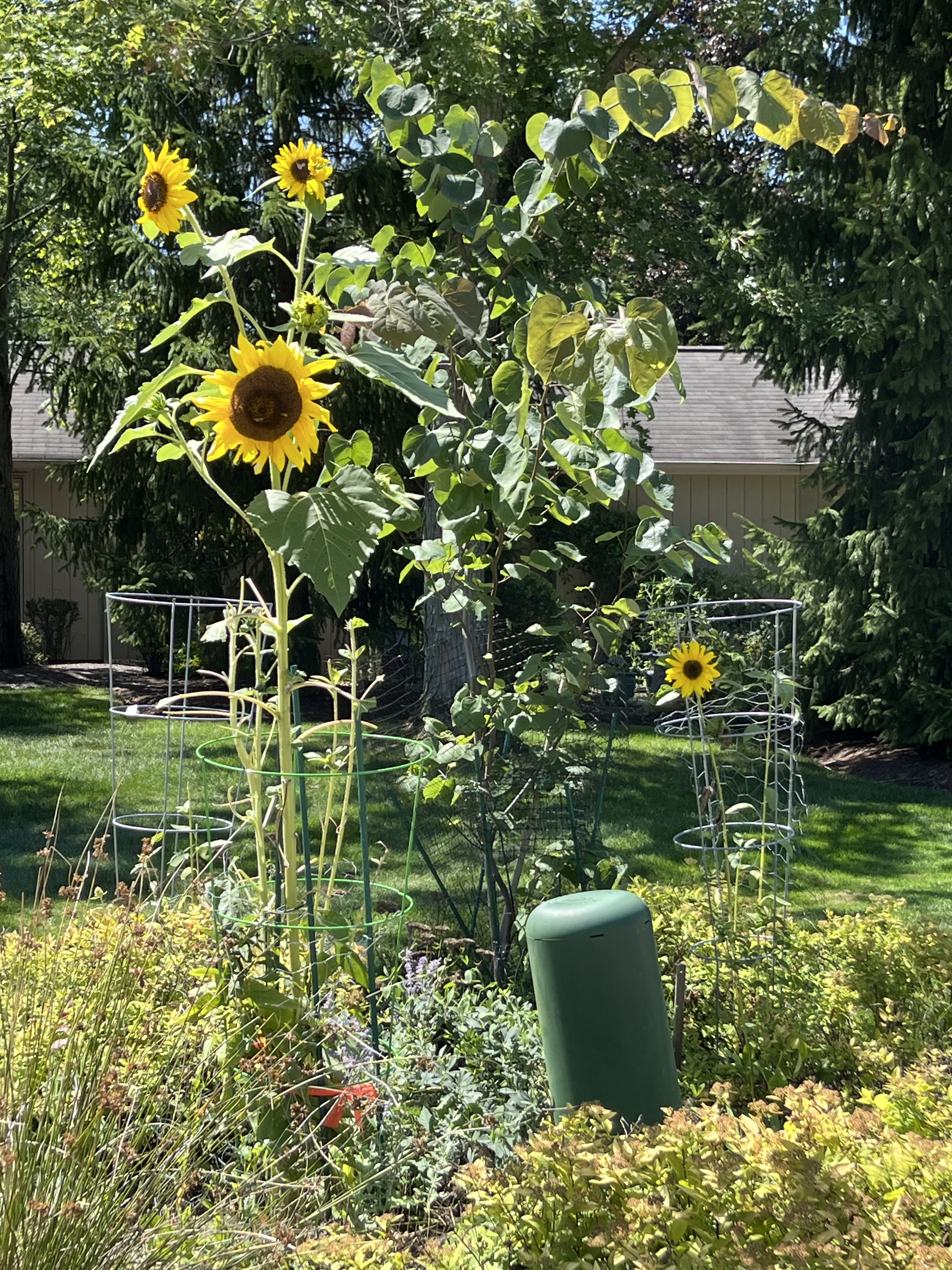
There are a few reasons for this. First, flowers that are allowed to go to seed provide natural nourishment to birds during the seasons when food is sparse. Last year, we left our sunflower standing throughout the winter and were thrilled to watch the birds slowly peck away at the seeds that lined its face.

The second reason to leave your dying plants untouched is that standing stems provide shelter for insects and their eggs over the winter. This is why you may have seen posts telling you not to start gardening in the spring until it has reached a consistent fifty degrees. If you must chop down your dying plants, try to leave several inches of growth at the base, and lay the chopped stocks in a loose pile in a corner of your yard. This will provide some homes for insects and minimize your chances of disturbing those that have already taken up residence in your flowers.

Another reason that Lazy is Best is root protection. We have a bed of chrysanthemums that come back every year. Technically, the recommendation is to cover them with straw to keep them safe from our mid-West winters. However, I have found that when I leave the dead stocks standing until they are dry, I am able to cut them and let them fall in place to protect my roots. This saves me a lot of time and some money.

Letting the dead growth fall in place has other benefits. In the natural environment, nutrition is meant to cycle from the ground into the plants and then back into the earth when the plants die and decompose. Being lazy when it is not growing season allows this natural process to happen, making your soil more fertile for the next year. Just make sure that the decaying plant matter does not create too thick a barrier over your bed. Air needs to be able to get in and dry things out so that your roots don’t rot. Similarly, some plants will produce fertile seeds that can spread in your beds and help you fill in spaces between plants that would otherwise attract weeds. You may even be able to enjoy an annual plant two years in a row if it reseeds its self! Unfortunately, this will not always happen since many cultivated plants have sterile seeds, but most native plants and some others will spread via seed.

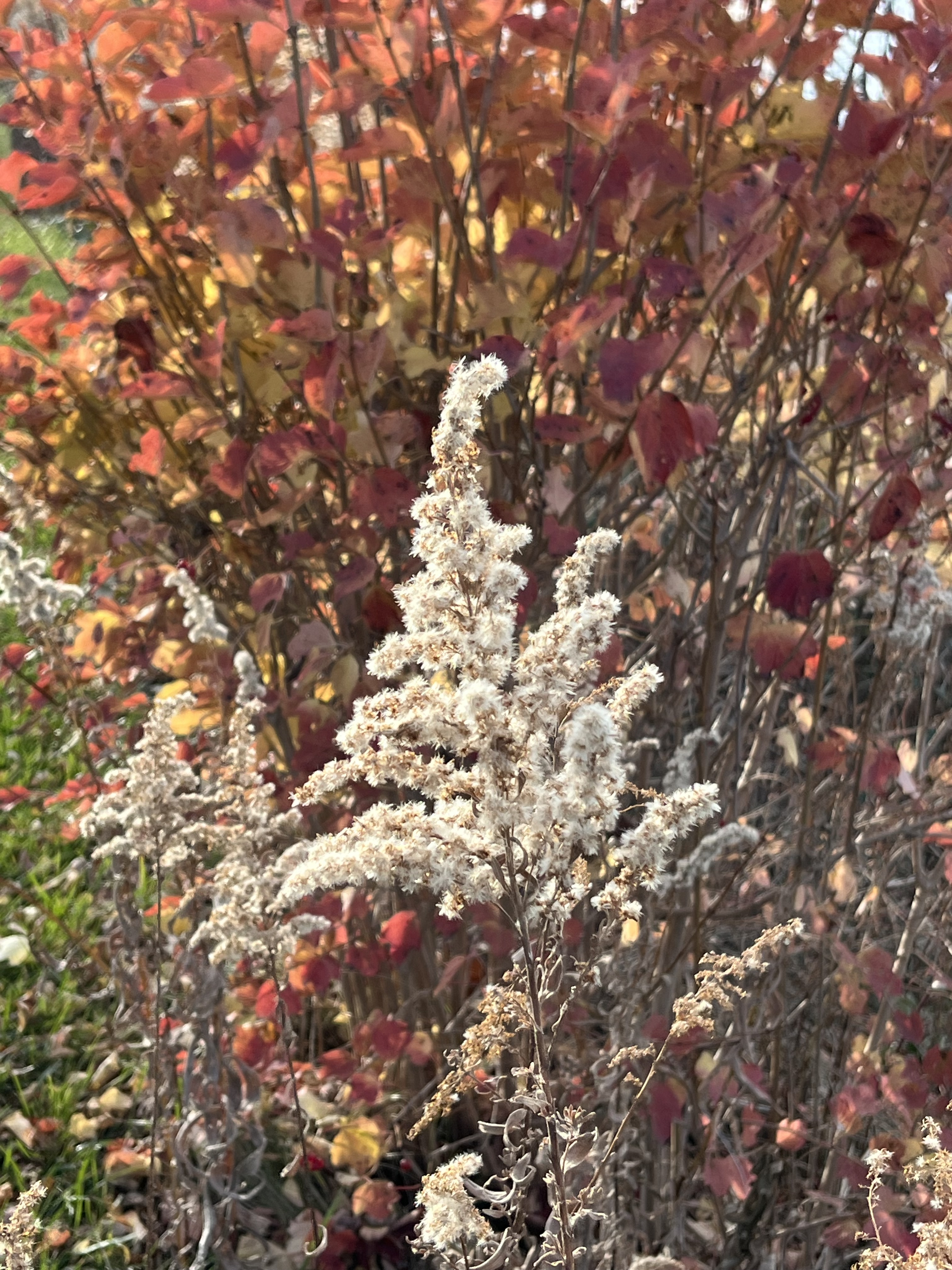
The last reason Lazy is Best is purely cosmetic. You have worked so hard all year to make your garden look interesting but if you chop down all of your growth in the fall, you miss out on its visual interest over the winter. Plants that are allowed to remain standing after they have died add different shapes, textures, and dimensions to your yard. They may also provide places for stunning icicles to form, snow to form natural sculptures, or Christmas lights to hang. Don’t turn your yard into a boring wasteland for the winter. Let it remain magical and intriguing.

So what should you be doing as part of your lazy autumn gardening? Here are some ideas to keep you busy:

  1. Mulch your fallen leaves and spread them over your beds. This saves a ton of money and provides your garden with valuable nutrients.
  2. Take in any lawn decorations that won’t withstand the winter.
  3. Dig up and bring in the bulbs of plants that can’t overwinter (my calla lilies are about to come into the dark garage where they will spend the colder months).
  4. Plant bulbs for spring flowers. Add a few each year for an eventual fairyland.
  5. Do any pruning for plants that require fall cutting.
  6. Cut back the bare minimum in your front yard to keep your HOA happy. Just make sure you pile the plant stocks loosely in an undisturbed corner of your yard.
  7. Make sure the birds have plenty of food and a water source that will not freeze over the winter (you can find heated bird baths that you just plug into your outdoor electrical outlet).

Have a happy, lazy fall!


Top Ten Garden Tips: Tip Two

Rain Gardens are incredibly practical and beautiful ways to deal with water issues in your yard while helping to preserve a healthy water supply and habitat for animal life.

A Rain Garden is basically a tub shaped garden into which rain water is redirected. The plants in a rain garden help to process water runoff back into the ground while purifying it of any pollutants it may have picked up. Species of plants are chosen and located based on the amount of water that is expected to pool in the bed when it rains and their location within the bed. In other words, water loving plants are placed in the center of the bed, with more dry-loving plants lining the sides. Native plants that can handle both flood and drought are often prioritized for all areas unless the ground is constantly wet.

The initial work of installing a rain garden is substantial, but not significantly more involved than installing any other garden bed. Once the garden is fully established, it is remarkably low maintenance and demands few resources. The plants are arranged so that, once they are fully grown, they take over the space in the garden. This eliminates opportunities for pesky weeds to grow. Additionally, because the garden bed self-waters during rains and the plants selected can tolerate drought, these gardens require very little extra watering, particularly if planted in the fall or early spring. This conserves water, limits water bills and saves gardeners time.

I began to work on my rain garden last fall when I recognized that the lawn was particularly dry and I did not want to be spending time and excessive money keeping it alive. However since the home is in the center of the town and beach activity, something needed to be done to enhance the curb appeal. In addition, since the house is right up the hill from one of the Great Lakes, I did not want pollution from our property running down the hill and into the lake. Finally, I did not like how close to the house our downspouts dumped, though this was necessary because of the narrow lot.

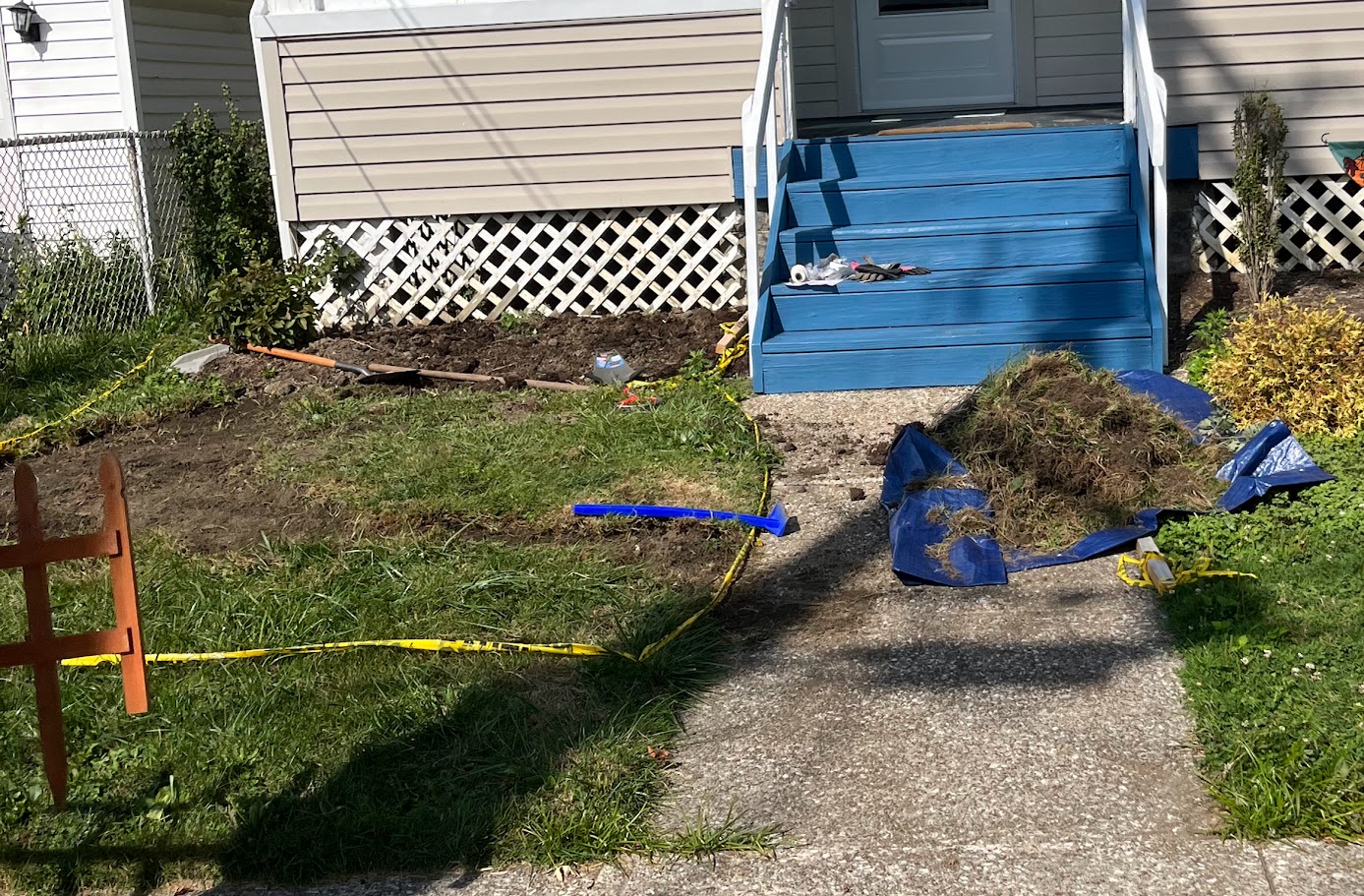
You can see the grass that I was concerned about in this picture. On the right, the grass nearly died in the summer heat. On the left, the lawn was doing better, but still quite dry, especially after a day of full sun.

I was unsure of whether I should put a rain garden on both sides of the walkway, or only on the left side, which had easy access to an additional downspout and would be able to filter the water from both our covered porch and half of our roof. The decision was made for me when I called 8-1-1 to find out what was underneath the lawn.

As you can see, the inspectors came out and found that our gas line runs almost through the middle of the right-hand yard. Since rain gardens require a significant amount of digging, placing one here was out of the question.

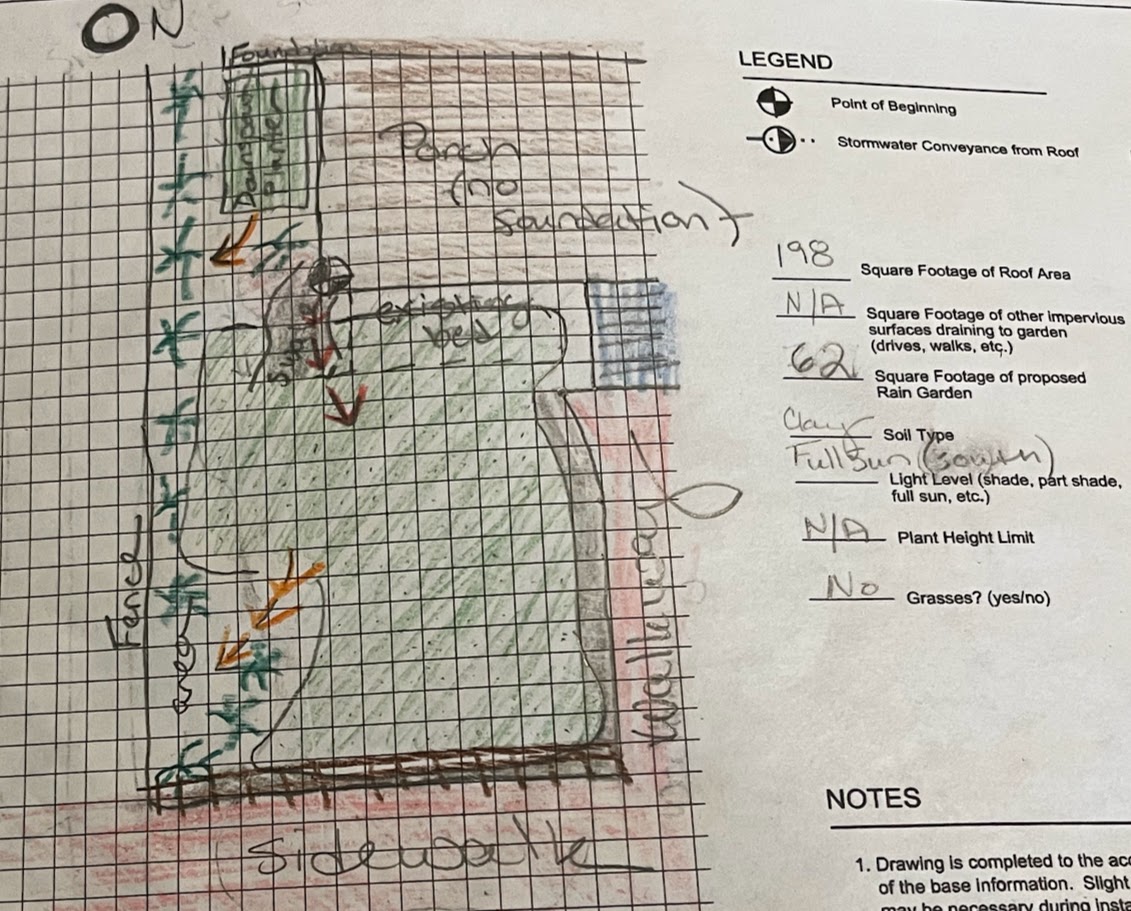
Once I had determined where to put the garden, it was time to start designing it! I used a piece of graph paper having each square to represent a square foot. I also cheated a bit and did some measurements of the garden and roof using google maps since we had not yet moved into the home. By planning it this way, I started out with a wealth of information: how much surface area would be draining into the bed, how much soil I would need, how much mulch to buy, and best of all, how many plants I would require.

Once I knew the surface area of both the garden and my drainage area (the roof) I needed one additional piece of information: how quickly did my soil drain? To find out, I had to do a percolation test. I dug a small hole in the middle of the where I intended to dig that went down about two feet. I filled the hole with water, waited for it to drain and then filled it again. Then I waited for the hole to empty. In my case, the hole did not drain within twenty-four hours so I knew that I needed to dig the garden bed to be three inches deep. I also knew that the garden needed to have an area that was at least 30% of the area of the drainage area. If it had drained within the twenty-four hour period, I would have needed to dig four to six inches deep and make the area of the garden 20% of the area of the drainage area. I am not sure why it works like this, but whoever came up with the calculations seems to have done a good job!

Due to space constraints (the garden had to be at least 10 feet from my yard and my property line), my bed was a little too small for the drainage area. However, the numbers were awfully close and, since the downspouts were basically just dropping water between the foundations of two homes, redirecting the water to the front yard would only help to solve the problem. If there was a risk of water running towards my foundation, the sidewalk, or the neighbors yard, I would have had to rethink my plans – one of a rain gardener’s goals is to “do no harm.”

Fortunately, I got the go ahead from my instructors and could recruit my kids for the garden’s installation!

We started in mid-fall. I began by laying down tape to let us know exactly where the garden should go. Then we began the exhausting task of removing the sod – but we didn’t throw it out – we saved it on a tarp for later. Once we had dug down the required three inches and made sure that the bed was completely flat in the center, it was time to start building up the berm that runs along the edges of the bed. The berm is important because it keeps the water in the pool area long enough that the plants can process it. The berm surrounds all of the sides of the garden except for a small gap where the water enters (this should be slightly elevated and flow down hill towards the garden) and the overflow area (this is about a foot wide lowering of the berm which will direct water in the right direction if the bed becomes too full). I lined the entry and overflow areas with gravel, then piled the sod we had removed from the garden along its edges to create the berm. My kids enjoyed running around to pack it down and by the spring, the grass had grown in to hold it all together.

Then it was time to add the soil back into the bed. We added four inches of topsoil followed by two inches of compost and then mixed it. This filled the bed with soil that was now loose and ready to hold water and plant roots. We topped the area with a layer of mulch so that we would not have to mulch around the plants and to help hold water in the soil. Finally, it was time to lay the plants out and see how they would look in the places I had planned for them! Once I was satisfied, we started digging and plopping those shoots into their spots.

Here you can see the newly planted garden. The stepping stones allow us to access the garden when it fills with water and is wet. In the far back corner you can see the gravel for the water inlet.

The garden did well over the winter and was surprisingly happy come spring. In fact, during the spring, it was only manually watered once and that was just because I was watering the newly installed bed on the other side of the yard and decided to do both. Basically, it has self-watered even with some dry 80 degree weather! There are a significant number of weeds this year since it has not yet filled in, but it will get easier each year. I expect that by year three it will be basically on autopilot.

The garden as it looks today, seven months after planting. It is really starting to grow after the winter pause and slowly filling in the empty spaces. This year it will still be laying down roots and establishing itself but by next year it should look like its always been there.

As you can see, a true rain garden takes a lot of work to set up and has some very specific site requirements that don’t always work. For example, in part of our yard, the ground was a mud pit in the spring, hard as rock in the summer, and full of roots all year round. The roots prevented me from installing a true rain garden in that spot, since the required digging would damage the trees. Regrading the area wasn’t an option since it would force water back into our foundation or onto our neighbors yard. However, by digging down slightly to redirect the majority of water into shallow basins that I lined with rock I was able to turn these dangerously tempting play areas into delightful and intentional looking garden spaces that boast plants that thrive in that environment.

The more formal bed which contains a statue and bird bath
along with the rock pool and plantings.
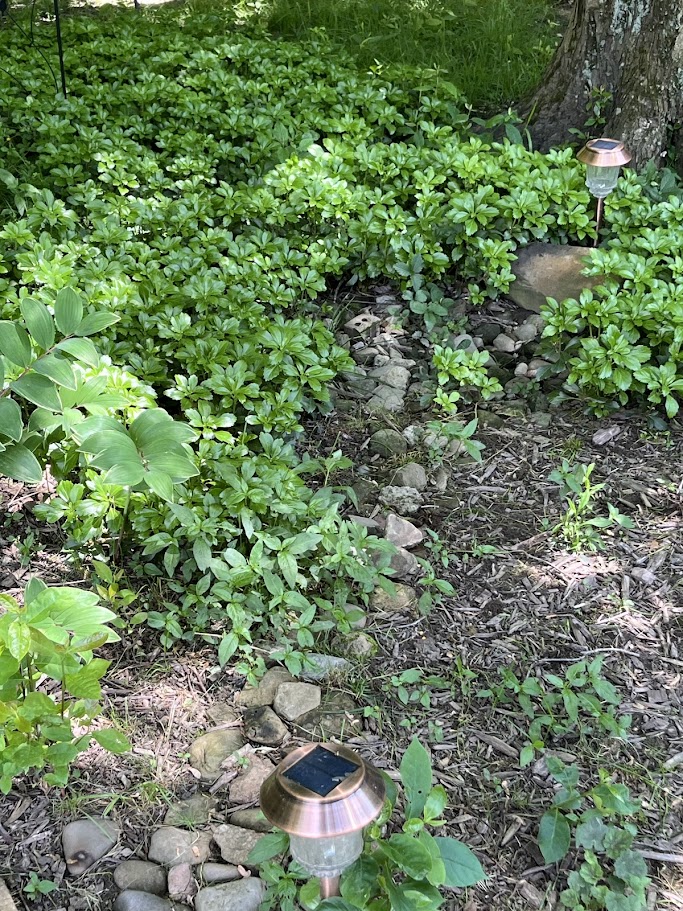
My more wild looking woodland bed and rock pond. The pachysandra is not native unfortunately, but was already there and when I drained the surrounding area slightly, it filled right in creating this peaceful setting!

So, if you aren’t looking to build a certified rain garden, there is no reason why you can’t use a less structured method to direct, pool and utilize water in problematic patches of your yard! It will likely require significantly less work and still offer you beautiful and practical landscaping options.

Top Ten Garden Tips: Tip One

I was strolling through my garden today taking pictures and I thought, why don’t I combine my favorite two solo activities (writing and gardening) and answer some of the questions my friends have been asking me lately? So when the heat of the noon sun drove me inside, that is exactly what I did!

I have to be honest, none of these ideas are things I came up with on my own. They are simply my favorite strategies that I have gleaned from a variety of classes, articles and in-person tips from fellow plantheads. Some of them are mainstream ideas, others not so much. My own yard has gone from a traditional suburban lawn and shrub garden (with some herbs thrown in) to a Certified Wildlife Habitat with an official (and some unofficial) Rain Gardens thrown in.

As much as possible, I try to be cognizant of the ways that my yardwork impacts native species around us and to use my yard to heal our earth. If my garden is blooming, buzzing with insect life, and filled with birds and other wildlife, then I consider myself to be successful. So in some ways, I am a green gardener. I use organic, plant based lawn care products (though my husband doesn’t always follow my lead), and we avoid invasive plants or plant them in places we know they cannot spread. However, I will say I am not hardcore enough to rip out (or refuse to buy) some beloved non-native plants as long as they don’t hurt our local ecosystem.

Also, in the garden, I believe less is more because less money and less labor means more time and resources to enjoy it! So if there are environmentally sound ways to reduce my costs and efforts, I am all for it.

Now that you know my overarching gardening philosophy, here is my first tip:

1. Green Mulching
When we first moved into our home, I spent days weeding each part of our garden. By the time I finished our yard, it was time to start weeding the first patch again. As I was breaking my back (literally) doing this, I also made the mistake of pulling out a lot of volunteer plants that I could have kept if I hadn’t been so narrow in my plant selection. As a result of my over-zealous weeding, we ended up with some major foundation water issues – all because I removed some plants during hours of laborious weeding!

The plants haven’t fully grown into this bed yet and you can still see some residual wood mulch under my leaf mulch. Still, considering that this patch took a day to weed in the past, Green Mulching has helped a lot.

Needless to say, the garden that I loved was quickly becoming my dreaded enemy and I couldn’t help feeling betrayed by the innocent looking rhododendrons staring at me through my front windows.

Then I discovered Green Mulching and, at the risk of sounding like a salesperson, it has been the best time saver/garden improvement I have found. The idea behind green mulching is to plant so many plants, so close together that there is no room left in your garden for the weeds to grow. This may sound chaotic but done properly, you can use layering (see a later tip) and ground cover plants to save literally days of your life (and years off of your back)! As an added bonus, telling people you are green mulching gives you an excuse to keep adding to your growing garden diversity and who among us does not need a reason to steer their car into the garden center parking lot?

This area took me hours to weed before I began green mulching and its right by my front door so I need it to look good! You can see a few tufts of grass that need to be pulled but that is all that I have to do now. In total, this section takes a minute or two to weed a few times a growing season.

As if those are not reasons enough to consider this method, Green Mulching is also more eco-friendly than more traditional mulching methods. Here’s why:

  1. Traditional Wood Mulches were originally not a terrible idea from an environmental standpoint. People have been mulching gardens for a long time using biodegradable materials like leaf matter and straw. In the last century, paper factories and other industries that utilized wood would sell off their wood waste to be used in garden beds. It eventually broke down and returned necessary nutrients to the garden soils that had been depleted by plant growth. In this setting, as long as no harmful chemicals were used to treat the wood, it was a great idea. However, once everyone started using mulch, the demand exceeded factory waste and wood mulch became an industry of its own. As a result, the mulch we buy at the store comes with real environmental (and financial) costs.
  2. Stone and Rubber Mulches, while longer lasting alternatives than wood mulch, have their own potential drawbacks. Most importantly, unlike wood and other types of biodegradable mulches, they don’t break down over time. As a result, the plant bed soil is depleted of nutrients overtime and these nutrients are not returned to it through the natural decomposition of dead plant matter. As a result, beds that use non-decaying mulches eventually lose some of their fertility and may require additional fertilizers and compost.

Green Mulching, on the other hand, allows gardeners to work with natural plant cycles while growing plants that benefit the environment. Following the natural pattern eliminates the unnecessary work that goes along with fighting nature. This is particularly true for planters who choose to leave plant matter standing over winter, compost dead plants, and mulch with leaves in the fall. Green Mulched beds are continuously refreshed with nutrients from previous plants. In addition, the dense leaf cover provides shade and holds moisture in the soil, limiting the amount of watering required, and the roots of plants help keep soil from eroding or compacting. And, of course, you save time by crowding out the weeds!

Treasure in Jars of Clay

I have walked down the aisle so many times before: as a baby in a baptismal gown; as a candidate wearing a dress that was specially selected for the final step of my journey into Catholicism; as a bride, veiled and adorned with white lace; as a mother carrying a little child draped in white. Yesterday, I came to the front of the Church shepherding a little girl whose post-Lacrosse hair had been forgotten and hung in an off-center, half-fallen out ponytail. I came carrying a little boy whose shoes were inadvertently left at home. I came after sitting through the reading of Christ’s Passion while trying to prevent that little boy from poking the lady in front of us with his palms. I came after whispering threats of spending the remainder of the service in his car seat if he didn’t quiet down and stop kicking the pew. I came hoping that no one heard him belting out, “The Doggy of Faith!” in a distorted echo of the priest. I came after keeping my foot suspended for almost an hour so that the kneeler did not get knocked down into any unsuspecting shins. I came after trying but failing to silently mouth instructions to my daughter through my mask. I came realizing I should have worn a belt with my new pants. I came thinking that I should have checked what my daughter picked to wear before we left for church. I came hobbling along with my ankle in a brace, unsure when it would choose to give out again. In short, I came as a very human, very imperfect person and that act of coming helped me realize the incredible beauty of my Savior and the Mass He gave us.

The wonder of our liturgy is not the bells that brought a gasp of awe from my distracted son and redirected his attention towards the altar. It is not the music we sing, texts we read, or words of prayer we say. It is not the faithful solemnly processing in a line. It is not those who are meticulously clad in their Sunday best. It is certainly not my ragamuffin family tripping and stumbling its way along.

The treasure of our liturgy is Jesus, himself. He is the one at whose presence the bells ring. It is Jesus to which all of our songs, readings and prayers point. He is the Bridegroom waiting for us at the aisle’s end with nothing but infinite love. He is the one who wants to be united to us whether we are dressed like royalty or paupers, knowing that we are all hopelessly a mess underneath the coverings with which we wrap ourselves. His unquenchable love for us that endures all of our short comings and His all-knowing and complete welcome are the true treasures of the Church. He is what makes our faith beautiful and in the process of surrendering our pride and coming to Him in the midst of our own humanness, we are made beautiful, too.

So I encourage you to come to Him this Holy week. Come with whatever shortcomings, embarassments, and disappointments you have. Come with your Lenten failures and your unruly children. Come if you don’t remember when to sit, stand or kneel. Come if it has been years since you last came. Come if you just can not get over your sense of guilt and shame. Come if you are late. Come however you can. You will find a Savior waiting for you with wide-open arms, ready to dazzle you with His unbelievable love as He welcomes you home.

Seeing the Perfect Christ In His Marred Body

When I was in high school, I spent a horrible week doubting that God is the good God who He says He is. Like far too many in our world, a family I cared about had been wounded by the abuse of someone who should have been safe for them and I could not understand how a good God would allow such a terrible thing to happen. I was angry and felt betrayed by the God who I had, up to that point, always trusted implicitly. Believe me, I let Him know about it. I raged at Him exactly as you might expect a rebelious teenager to do and, somehow, He responded by leading me to the Book of Job.

I devoured the chapters, accusing God alongside Job and then, suddenly, God spoke back. Who was I to question Him? Would I discredit His justice? Did I understand enough to condemn Him? Me, who was not there when the foundations of the earth were laid, who cannot command the sun and the moon, who has never walked in the heavenly storehouses full of snow? Like Job, my doubts were consumed in the wake of His overwhelming, mind-blowing presence. At the same time, my certainty that I knew enough to challenge Him was swallowed in the doubt that comes with the awareness of how little I truly knew. Who was this God I had challenged, this One whose power was so far above and simultaneously so encompassing of all the ways of man? Who was this Almighty Strength who could destroy me with a glance and yet chose to mercifully forgive my accusations and draw me more intimately to Him through my doubts? Could a God who has so many responses at His disposal but chooses to respond with gentleness be anything but good?

For the first time, the realization that God was so far beyond anything that I had ever thought or known engulfed me. I had always rested in the fatherly intimacy of God, yet, in that moment, I came face-to-face with His otherness.

It was this separation between God and His creation that helped me to make sense of how a good God was not irreconcilable with the evil committed by His people. Over the years, I have often come back to that lesson that God taught me during that torturous week of my adolescence – when facing abuse by a person studying to be a youth minister, when journeying into the Catholic Church with eyes wide open to the abuse that was covered up in the city of my birth, when wrestling with allegations within my own Catholic Community. Always, I am reminded that God and His Truth exist regardless of the actions of His creations and even His followers.

Yet, more recently, this has been harder to remember. Over the past few years, it seems that too many Christians have done unimaginably heinous things to mar the precious Body of Christ here on earth. From supporting ideology and lies that foment hate, to failing to sacrificially love and protect one another; from devaluing the precious value of all of the lives God has created, to allowing divisions to shatter Christian unity; from the unbelievably horrific acts in Canada’s Native American Schools, to the 330,000 child victims of abuse by the French Catholic Church; from my own Diocese’ choices that continue to lead to unnecessary COVID spread and deaths, endangering my own children, to the desires of some radical traditionalists for the Pope’s death – the actions of Christ’s representatives on earth recently have been heartbreaking.

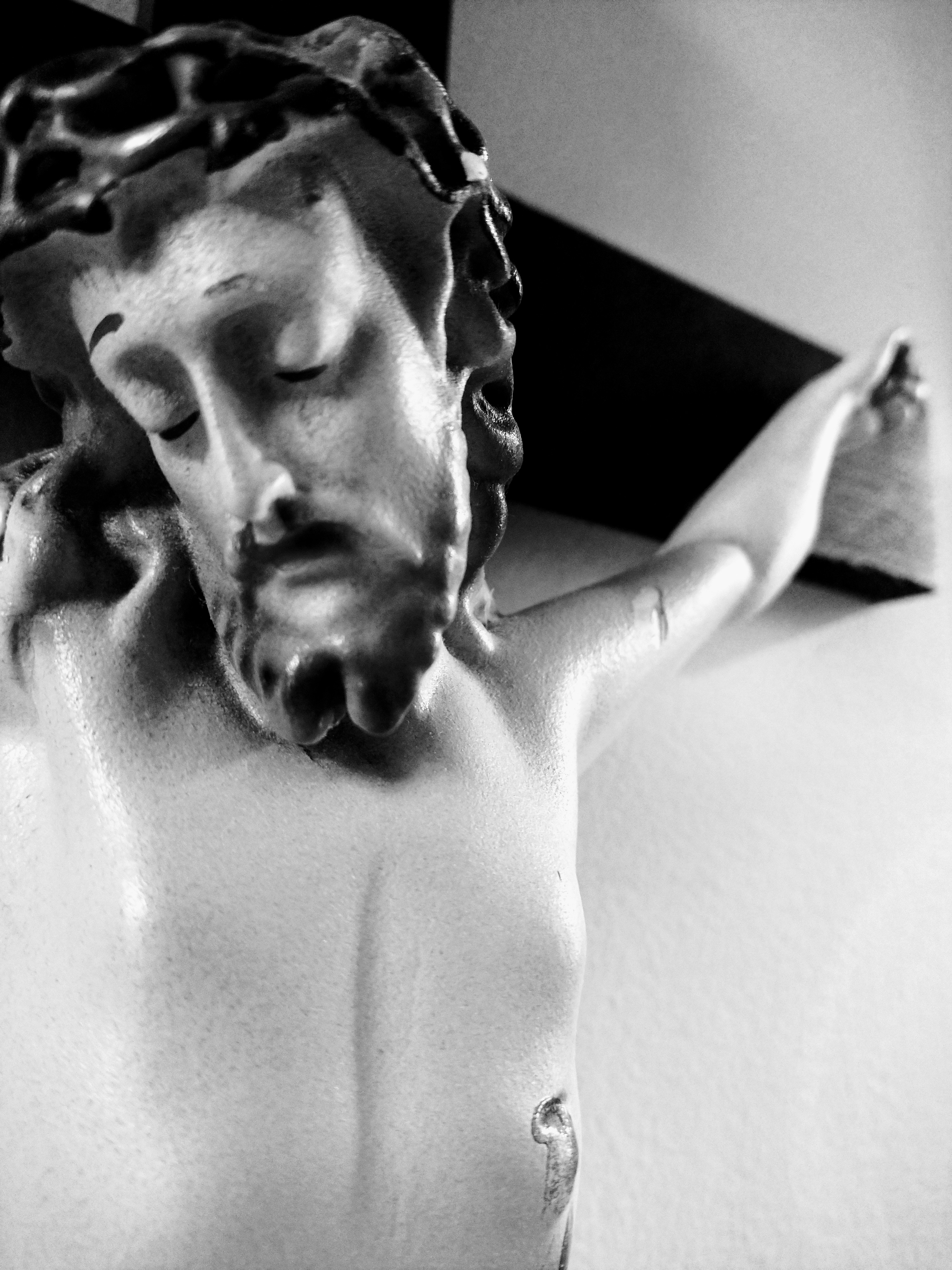
Yet, I can’t help but think of Christ’s other body and how man similarly marred and distorted it beyond recognition. I think of the image left on St. Veronica’s cloth – bruised, beaten, bleeding. I think of the broken back and the pierced hands. I think of the lifeless body, brought down from the cross and laid in the arms of a mother who knows she holds her Son but would not recognize Him if she had not stayed with Him throughout His destruction. I think of a powerless corpse, laid in a tomb and left to succumb to the final destruction of death’s decomposition.

And then…

And then that body had the power to do what none had ever done before. It defied death, defeated it, and it walked out of the grave.

Somehow, God took all of that damage and destruction of His son’s appearance and He made it the ultimate picture of Who He really is: a God of infinite love, mercy, and even power. Somehow, out of the distortion that His creation had inflicted on His image, He drew the purest, truest representation of Himself. He who described Himself simply as the One Who Is, was so far above and beyond the deeds of his creatures that what they did could in no way diminish Him. Infact, inspite of their worst intentions, their abuse only led to His glorification.

I don’t know how God will deal with the misrepresentations and distortions of His image here on earth right now, but I know that they won’t be the end of the story because I believe that God exists independently of anything His people do or don’t do. His goodness and His truth are not dependent upon us – they are realities that exist by their own right. He is, He has always been, and He will always be. Nothing we do can change that – it can only serve to glorify Him, whether or not that is our intention.

While We Were Sinners


The George Floyd trial and its reflection of the immense disregard for the sanctity of life that has come to the surface this past year has been weighing on me the past few days. The idea that someone’s race, social standing or age – things that they have no control over – could impact the value placed upon their life is abhorrent. We have seen this idea surface time and time again this past year and it has cost us so many lives and done huge damage to our souls. 
Yet, the idea that somehow someone’s drug use, or any other behavior, could make their life less valuable and their death more acceptable is equally opposite the teachings of true Christianity. Every religious observance we make this Good Friday should remind us of that. 

Paul wrote about what we remember today thus: “Very rarely will anyone die for a righteous man, though for a good man someone might possibly dare to die. But God proves His love for us in this: While we were still sinners, Christ died for us.” Paul then reminds us that Jesus died for us “while we were enemies of God.” Jesus came to us in the midst of our sin and while we were still sinners, He loved and valued us enough to give His own life so that we could have eternal life. If our Savior so valued us as sinners, who are we to say that anything anyone else does diminishes the value of their life?

Jonathan Edwards, a congregational minister from the 1700s said it this way: 

“Christ loved us, and was kind to us, and was willing to relieve us, though we were very hateful persons, of an evil disposition, not deserving of any good…so we should be willing to be kind…”

If we doubt that we ourselves were equally in need of Christ’s sacrifice, consider this story of Yehiel De-Nur, a Holocaust survivor who was a key witness against Adolf Eichmann (one of the main men behind the Holocaust). When Yehiel saw Eichmann, he was overcome with emotion and fell to the ground because he realized that Eichmann, sinful as he was, was a fellow human and that caused him to recognize his own human propensity for evil. In De-Nur’s words: “I was afraid of myself…I saw that I am capable to do this. I am…exactly like he.”

I know, without a doubt, that when I look beyond the outside of what people can see, the same sins course through my own heart that lead to all the sins I see in others: despair, hatred, selfishness, unchecked ambition, gluttony, impatience, sloth, indifference and turning away from God and His will from my life.

When I look at George Floyd, a man who became addicted to substances he turned to in order to blunt pain, I see a bottle of wine, sitting on my kitchen counter and promising to numb my sorrow at 8 o’clock in the morning. I know that the choices that followed – to dump it out and not bring alcohol into the house while I was acutely grieving – could just as easily have been to drink one glass that morning, then two the next, then a few more a week later, until I was as much a prisoner of a substance as he was. I don’t know why I made the choice I did and George Floyd made the choice he did, back when it was a choice for him. But I do know, that the same impulses flowed in both our veins and we aren’t as different as our outcomes would suggest. And I know, most importantly that Jesus loves and values us both, despite our sins and that because of this, He hung on a cross and died for us. 

On this Good Friday, if we want to share the Gospel, it is this: that no matter what choices we have made, actions we have done or deeds we have committed, Jesus looked on us, loved us and died, taking upon Himself the consequences that we alone deserved. 

If we want to really understand the depth of the Gospel’s power and for it to ring true to those around us, it is by doing this: as we look upon Christ’s broken body, hanging on the cross, as we see His mother sobbing at His feet, as we hear His body breaking in the bread and His blood pouring out in the wine, we must remember that all of this was for each one of us. We did this to Jesus. Our sins called out “Crucify, crucify!” and out of love for us, Jesus submitted. If we let that reality really sink into our own hearts and let it change the way that we see those around us, knowing that it was for them, too that Jesus chose to die, then we will be true witnesses to the Gospel: “That while we were still sinners, Christ died for us” because He cherished and valued all of our lives even when we were still living in sin.

Fragments

IMG_20200402_212603245

There is a mindfulness exercise that I learned during my psychology training. It involves sitting comfortably in a chair and imagining that all of the thoughts that come into your head are riding along a conveyor belt and you just observe them as the belt takes them in and then out of your consciousness. You are not supposed to judge them in anyway. No bad thoughts, no good thoughts. You just observe them, acknowledge they exist and let them go. I hated that exercise, it is too hard for me to just observe my thoughts and let them go. I have to mull over them, know them inside out, judge them, change them and shape them. I have to embrace them fully or send them into exile forever. I have to process and make sense of them, to fit them into my understanding of the world, and life, and God. In short, I am a terrible mindfulness patient.

In a lot of ways, my life right now feels like it has turned into that mindfulness exercise. As I respond to the dramatic changes that are happening in my life, sometimes on an hourly basis, my reactions are too big and powerful to process right now. I can’t let myself dwell on any of them because when one knocks me down, I have to right myself before the next wave crashes over me and I get knocked over again. Someday, I will process them and make sense of them. Someday, I will understand how they fit into my life story, my salvation story. I will do this because that is what we all must do to survive traumatic experiences without lasting psychological damage. I will do this because that is what allows us to ultimately move on. However, right now, the only way I can keep going is to acknowledge my thoughts and feelings and let them drift by me, to be revisited on another day. Consequently, it is difficult to write anything cohesive, so I will instead offer a few of my reflections that, while I have only partially absorbed them, have been meaningful to me.

Hansen’s Disease

Several years ago, my daughter was the kid who told the whole Sunday School class what leprosy was. Not unexpectedly, it horrified her classmates. However, I am realizing recently that we have all lost sight of some of the power behind the Biblical stories about leprosy. Since the discovery of a cure, leprosy is no longer a feared disease. In fact, it is such a non-issue that I didn’t even know that the current name for leprosy is Hansen’s Disease. However, in Biblical times, symptoms of leprosy not only meant often life-long health issues, but they also meant mandatory social distancing. Extreme, mandatory social distancing. In fact, this social distancing is actually codified in the Levitical Law which clearly lays out the way for the priest to determine if a person was “clean” or if he or she had leprosy and was, therefore, “unclean.” In some cases, this determination alone required weeks of isolation. When a priest made the determination that a person was unclean, the following was required to occur:

“Anyone with such a defiling disease must wear torn clothes, let their hair be unkempt, cover the lower part of their face and cry out, ‘Unclean! Unclean!” As long as they have the disease they remain unclean. They must live alone; they must live outside the camp.” – Leviticus 13:45-46

Clearly, this law would have huge implications for the lives of lepers. Implementing it would completely upend their lives. It would put them at risk by forcing them to live outside of the camp. However, over the past few weeks, as we have practiced social distancing, I have been struck by the social implications of this law. A person with leprosy would be socially distanced, even to the point of being seperated from his or her immediate family, for what could well be the rest of their life. That would be the worst part of leprosy.

In Father Damien and the Bells, Arthur and Elizabeth Sheehan described the fear of leprosy among the Hawaiian people in the 1800s thus, “It meant the most terrible doom they knew. ‘Separating Sickness’ they called it, for it was not so much the lingering death, the ugly disfigurement it could bring, or even the fact that it could not be cured that alarmed the people so much. It was because to be a victim (of leprosy) meant to be perpetually exiled. It meant never to see one’s family and friends again.”

Perpetually exiled. The most terrible doom. Yet, Jesus, when confronted by a man with leprosy, did not just say a word and heal him. He reached down and touched the one who had longed for human contact for so long, then he healed him (Matthew 8:1-4). And his followers were told to do the same (Matthew 10:8). Many did, among them St. Damien, who sacrificed his life serving the lepers quarantined on the Island of Molokai. What great love and compassion they had!

Gratitude

The Bible relates another encounter that Jesus had with lepers. At one point in His ministry, ten lepers came to Jesus and, standing at a distance, asked Him to heal them. Jesus sent them to see the priest and, as they went, they were healed. However, of the ten lepers who were healed, only one came back to thank Jesus (Luke 17:11-19).

So many times over the past few weeks, I have wondered why I was not more grateful for things that this pandemic has stripped away. Why did I get so frustrated and stressed every Sunday morning before Church, rather than thanking God for the amazing blessing of being able to actually go to Church? Why didn’t I thank God for the walk to my daughter’s school? Why did I forget to thank Him for playgrounds, playdates, friends and family? Why didn’t I thank Him for being able to get a book from the library or for being able to go to the doctors office to treat something that wasn’t emergent? Why didn’t I thank Him for hand sanitizer, lysol wipes, or toilet paper? Why didn’t I thank Him for the masks that my doctor wore during surgery to keep me healthy? Why didn’t I thank Him for flour or same day grocery deliveries? Why did I not give thanks each day that my husband, mother and father returned from the hospital healthy?

Why did I think of all these things as things that I was entitled to? Why did I think of them as rights? Why did I not think about them at all?

Whenever this pandemic ends and life becomes whatever our new normal will be, I don’t want to forget to thank God for all of these things. I don’t want to be like the other nine lepers.

Dependence

In addition to realizing how grateful I am for the things I used to have, I have realized how fragile everything I built my life on really is. Living in a wealthy, developed country with a good education and stable income, it was easy to imagine that my needs were pretty much covered. While I knew that these things were gifts from God, it was more in an abstract sense. I had no way to imagine what the widow who had nothing but a little flour and a little oil left to feed her son must have felt (1 Kings 17:7-16). If I am honest, I still can’t imagine it, but I do know the pangs of fear brought on by the thought of not being able to find flour so I can make bread for my food allergic children. I know what it feels like to pray that God will actually give my children daily bread to eat. Infact, I know more now about how dependent we really are on God for every aspect of our lives and I can understand a little bit more about how difficult it must have been for that widow to share what little she had with the prophet Elijah. I can begin to sense how terrified she must have been as she chose to trust God’s promise that, “The jar of flour will not be used up and the jug of oil will not run dry until the day the Lord sends rain on the land.” (1Kings 17:14). As a very human mother, I don’t want to understand this story any better than I already do, but I absolutely want my faith to grow to be more like this poor widows.

This brings me to my final thought from recent days which also has to do with dependence. In many ways, the needs that I am trusting God for are physical needs, however, the past few weeks have taught me more about how dependent I am upon God for my spiritual needs, as well. If my faith is to grow, it will not be because of anything I can do – I am just holding onto life with a white knuckle grip. As all of the external things that I do to nurture my soul (the Mass, Church, fellowship, Holy Week) have been stripped away and as the Church has recognized that even those things we do individually to worship and revere God (fasting, etc.) may be impossible for some of us to do right now, I am realizing that, in the end, we really do stand before God as unworthy sinners, unable to do anything to change our fallen state. Yet, more importantly, I am reminded that God has given His son to deal with our sin and that He is at work in our lives. I am recognizing that He alone is forming everything that is good about us, about what we do, and even about what we offer Him. Without God, we are nothing. We are dust. Yet, because of God, to dust we will not return.

Neighbors

Only seventeen years before I was born, Dr. Martin Luther King, Jr. was shot and killed. Seventeen years – exactly half of my lifetime. Only twenty-one  years before I was born, the Jim Crow Laws, which enforced segregation, ended.  So the same time that passed between my birth and my first sip of sangria was all that separated my birth from a time when laws said that a black woman could not use a white library, that a black child could be rejected from a white school, that a black father couldn’t take his family to Sunday dinner at a white restaurant, and that a black grandparent could be turned away from a white hospital. A mere twenty-one years!

Yet, all my life I thought that it was so long ago. “That’s the way they used to do it, in the old days,” I thought, “Society has progressed so far!” But the past few years have taught me what a foolish thought that was. How could such fear and loathing and exploitation of the “other” disappear in less than a generation? How could I really believe that what happened a mere seventeen years before my birth was a distant memory? How could I think that in less time that it took me to reach drinking age, a massive country like the United States of America could come close to attaining Martin Luther King’s dream?

Instead, we have been living in a different kind of a dream world – one in which, on the surface, everyone is equal and racism is condemned, but underneath lurks a hatred for the “other” that was never extinguished.

More and more each day, I am ripped out of my dreamlike stupor and forced to face the reality that racism and prejudice thrives in America. I witness police engaging in racial profiling against my patients, watch news articles about innocent black children killed by police brutality, and hear my white brothers and sisters justifying the police officers and excusing away their evil deeds. I talk to friends who dedicate their lives to fighting discrimination and prejudice that cheats minority children out of their right to an education, their parents out of a job, their families out of a home, and I think, “How can this be?” I go to church and hear a sermon condemning sports players who kneel out of their love for a country that they see desecrating itself with hatred, and I burn with shame as I see the only black family in the sanctuary sitting a few pews in front of me. Later, when I look at the news, I am confronted by a tweet from the President of the United States which uses traditional Islamic attire to mock and condemn his political rivals. It is as if our failure to eradicate racial hatred wasn’t enough, so our country now accepts Islamophobia without blinking an eye.

It is painfully clear to me that, this America we have created is moving farther and farther away from the dream that I share with Dr. King. It is also clear to me that, just as Christians and Christian teachings were once at the forefront of the Abolition and Civil Rights movements, we need to lead America to a genuine realization of Dr. King’s dream. We must remember our Savior as he surprised a Samaritan woman by asking her for a drink (“For Jews do not associate with Samaritans.” John 4:9) and then offered her the gift of His salvation as freely as He offered it to His own disciples (John 4:1-42). We are obliged to respond in holy anger when our Christian brothers and sisters are abused because of the color of their skin – like Jesus clearing the temple of those who desecrated it, we must speak out against those who desecrate His living temples (Matthew 21:12-17). We need to read the passage of the Good Samaritan carefully, paying close attention to Jesus’ answer that a Samaritan, a member of a group that was rejected by the Jewish people in Jesus’ day, was the very neighbor who we are to love as ourselves (Luke 10:25-37). And as we reflect on these passages, we must realize that “…we are not satisfied and will not be satisfied until justice rolls down like water and righteousness like a mighty stream (Dr. Martin Luther King, Jr., August 28th, 1963). For this is the right and natural outpouring of our faith.

We cannot remain silent in the face of the hatred that is rearing up in our nation. There is no time for hesitation or indecision. “Now is the time to make justice a reality for all of God’s children (Dr. Martin Luther King, Jr., August 28th, 1963). We must raise our voices, together with Dr. King as we daily proclaim, “I have a dream!”

20200105_150234